
Technology
Reliable assessment on the network you already have
True Progress assessments are designed to place very little demand on school networks, helping classrooms test reliably even where wireless coverage is uneven.

Built for real classrooms
Designed to place very little demand on your network
True Progress assessments are designed for the networks schools already have. They use very little bandwidth, allowing an entire class to test at the same time without placing a heavy demand on the school's connection.
That reduces the likelihood that ordinary variation in wireless coverage will interrupt testing or require teachers to troubleshoot network performance.
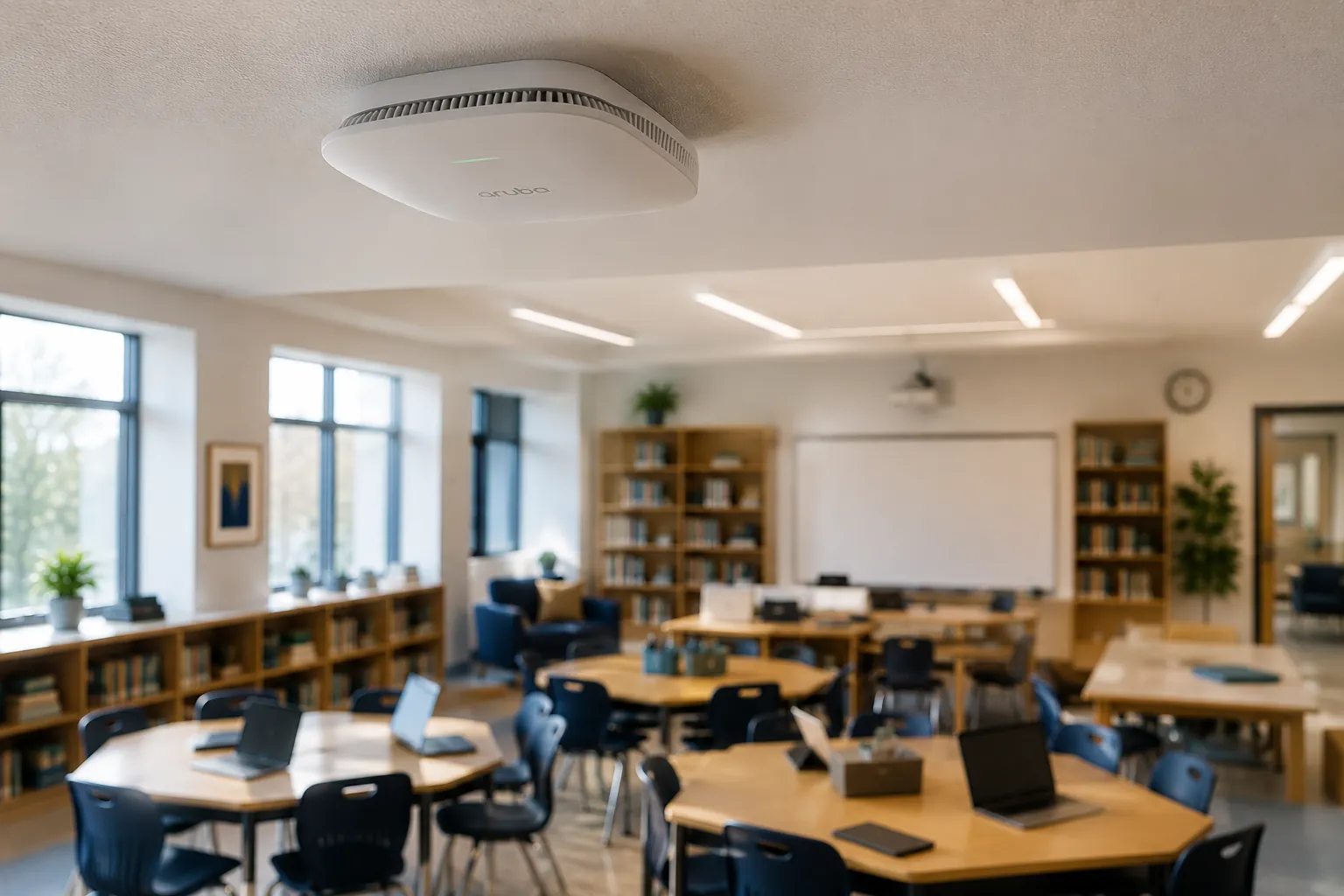
Why bandwidth matters
Thirty students share the same connection
School networks support many classrooms and devices at the same time. Every student testing in a room shares the wireless access point and the connection back through the school network.
Applications that load large videos, images, or other media increase demand on that shared connection. True Progress assessment items are deliberately kept light so less data has to move between each student device and the network.
That helps reduce delays between items and unnecessary troubleshooting during testing.
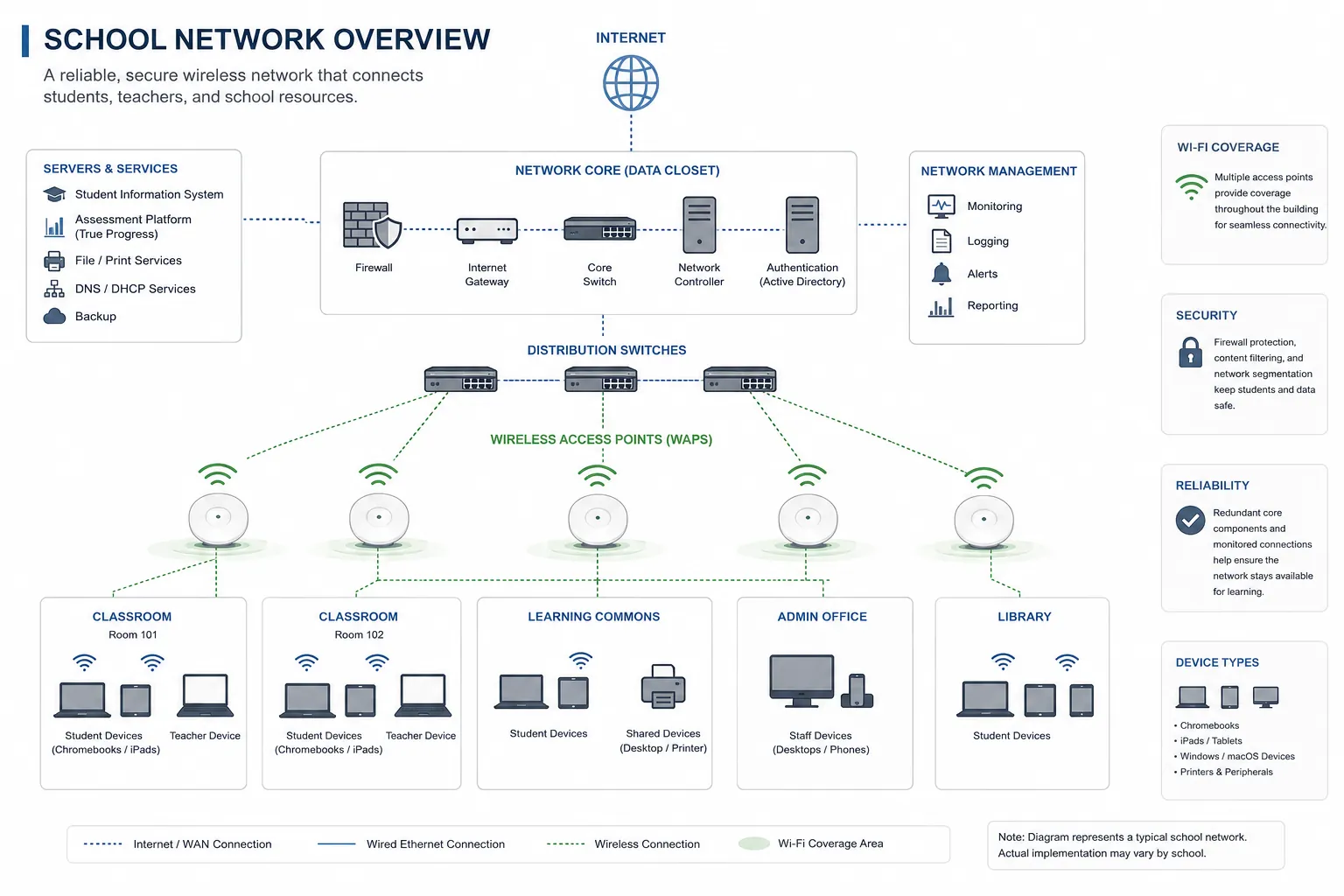
How light True Progress is
About 20 kilobits per second per student
True Progress assessment items use simple, fast-loading content rather than bandwidth-heavy media.
During typical assessment use, each active student device uses approximately 20 kilobits per second.
A class of thirty students testing at the same time therefore uses approximately 600 kilobits per second in total, well below the bandwidth typically required for a single streaming video.
For schools, the practical benefit is simple: True Progress places very little additional demand on the network during classroom testing, including in rooms where wireless coverage is less consistent.